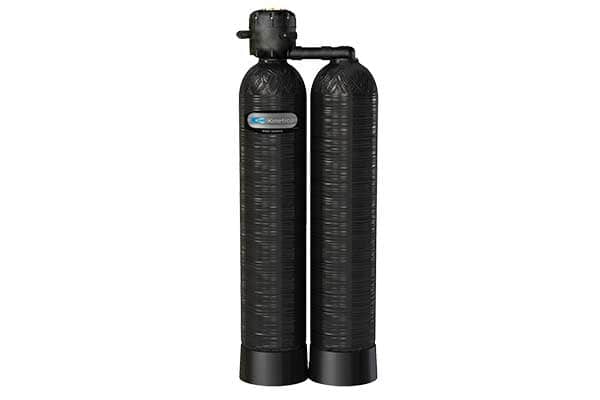
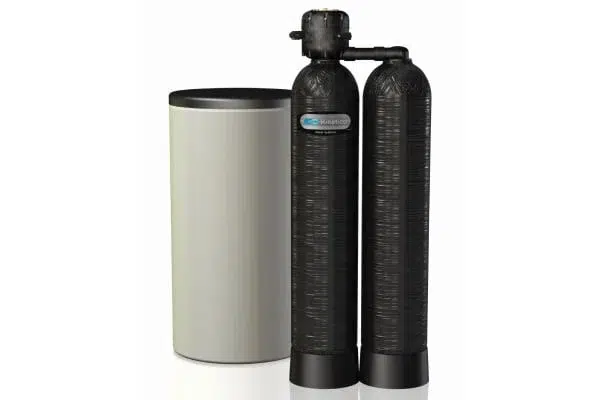
Kinetico® Softeners automatically regenerate, only when soft water is needed- not at preset intervals.
Kinetico® water softener systems are 100% non-electric and use less salt than any other system because they only regenerate when soft water is needed.
Water hardness and water quality vary widely across our region. We start with a comprehensive water analysis to determine your needs. You may find other water problems that need to be addressed, and Kinetico® can treat all of them.
You’ll never be without soft water- even when your system is regenerating.
Hard water spots are gone when dishes, glasses, and silverware are washed in soft water.
You’ll use fewer detergents and cleaners and still have better cleaning results. Scale, soap scum, and hard water stains are a thing of the past.
With soft water flowing throughout your home’s plumbing pipes and fixtures, you’ll eliminate scale build-up and save money on costly repairs and replacements.
Bathing with soft water is like bathing in a luxurious spa. No more itchy, dry skin or hair. You will feel the difference the very first time you experience it!
Detergents work better in soft water. Not only will you use less detergent, but your laundry will be brighter and whiter than ever before.
Clean, soft water extends the life of your washer, dishwasher, water heater, coffee pot, refrigerator, and any appliance that uses water and prevents scale buildup.
Water Softener Buyer’s Guide
Purchasing a water softener is a critical—and sometimes confusing—process for homeowners. This guide will help answer the most pressing questions people have when starting on their water softener journey.
Your water may look clear. But all water contains at least some dissolved minerals, including calcium and magnesium. “Hard” water has high concentrations of these minerals. They leave a residue on your skin after bathing, create cloudiness on glassware and shower doors, and require more soap and detergent when washing skin, dishes, and laundry.
Our water system professionals can test your water to understand your water’s hardness. As a general rule, water with zero to 3.5 Grains per Gallon (gpg) is considered soft. Water with 3.5 to 7 gpg is moderately hard, water with 7 to 10.5 gpg is hard, and anything above 10.5 gpg is very hard.
Water softening strictly applies to the dissolved minerals found in your water. Water purification focuses on impurities, including bacteria, chemicals, and sediment. Many homeowners rely on both types of systems, working in tandem, for optimal water quality.
A water softener system makes hard water soft by lowering concentrations of dissolved minerals, addressing the problems noted above. Water enters a home from a municipality or a well system. It travels first to a water softener tank containing resin beads that pull out the hard minerals. The system employs a second tank with a mix of water and salt that is used to clean the resin beads on a regular (often daily) basis when the system cycles through a regeneration process, described below.
Water softeners are not complex, so features typically come down to mechanical processes:
On-demand regeneration:
The water softener regenerates through an ion exchange that cleanses the resin beads. On some systems, this is done on a timed schedule. In more advanced systems, the regeneration occurs when a sensor detects that the soft water reservoir is depleted. This helps reduce the water used in the regeneration process as well as energy consumption.
Alternating tanks:
Larger systems will often use multiple tanks for softening and regeneration, helping ensure the supply of soft water, particularly at peak-use times.
Non-electric operation:
Many budget softeners run on household electricity. Higher-quality systems, such as Kinetico®, are non-electric and operate via the kinetic energy of the water flowing through the system.
“You get what you pay for” applies to water softeners. While budget-oriented basic models sell for less than $1,000, it’s important to consider a water softener’s impact on a homeowner’s quality of life. Budget systems can require extensive and expensive maintenance and parts replacement while never providing the performance to consistently deliver soft water.
Buyers should approach a purchase knowing they are making an investment of 10 to 20 years, rather than shorter durations. A home’s water quality is essential for an enhanced quality of life.
The required size of a system varies, based on many variables, with water consumption at the top of the list. Consumption depends on the number of people in a house, the number of bathrooms, tubs, and showers, the frequency of use, and the capacity of the home’s plumbing. A qualified water softener professional can work with a homeowner to determine the optimal system capacity and configuration.
Softener systems are relatively inexpensive to operate. The homeowner or a service provider needs to replenish the softener salt needed for regeneration. Home centers and hardware stores sell salt by the bag. Service providers such as Aquarius Home Services can also deliver it and replenish the water softener. Since Kinetico® systems do not run on household electricity, there is no cost to power the system. In addition, Aquarius Home Services offers maintenance plans to visit your home regularly to service equipment, including addressing warranty issues covered by Kinetico®’s five- to 10-year warranties, with the duration based on the model purchased.
This is the rate at which water flows through the system. It depends on the incoming water flow, the appliances the softener feeds within the home, and the type of softener used. Flow rate helps our water softener experts recommend the right softener for your home.
Water use varies, depending on a variety of factors, including: hardness of water from the source, frequency of softener maintenance (maintaining optimal salt levels for regeneration) and overall water usage. Kinetico® systems are efficient and are designed to help reduce the amount of water needed for softening.
Grains per gallon is a common metric for defining water hardness. Similar to the mg/L noted earlier, grains per gallon rates water as follows: below three grains per gallon is considered soft water, between three and seven grains per gallon is moderately hard water, seven to 10 grains per gallon is hard water, and more than 10 grains per gallon is very hard water.
We don’t recommend this. Having anyone other than a qualified water softener installation technician do this work can void product warranties, and many insurance companies may not cover damage caused by improper installation. In addition, a qualified water softener installation technician can help ensure that certain zones of a plumbing system that don’t need soft water, such as outdoor water spigots and irrigation systems, are not wasting softened water.
Protect your investment, and leave installation to a professional.
Contact Aquarius Home Services today. Our experts can answer your questions and help identify the best water softener system for your whole home.